
Qur’anic Exegesis: Its Foundations and Schools—Essential Knowledge for Every Exegete
Professor Hassan Yachou presents a comprehensive academic study of Qur’anic exegesis, clarifying its key terms, sources, interpretive principles, causes of disagreement, and rules of preference while warning against unreliable reports and ungrounded modernist readings.
Citation preview:
أكاديميأ.د. حَسَن يَشُو (2026). Qur’anic Exegesis: Its Foundations and Schools—Essential Knowledge for Every Exegete. مكتبة الطالب / وجدة.. https://www.hassanyachou.org/en/books/كتاب-التفسير-اصوله-ومدارسه-ما-لا-يسع-المفسر-جهله
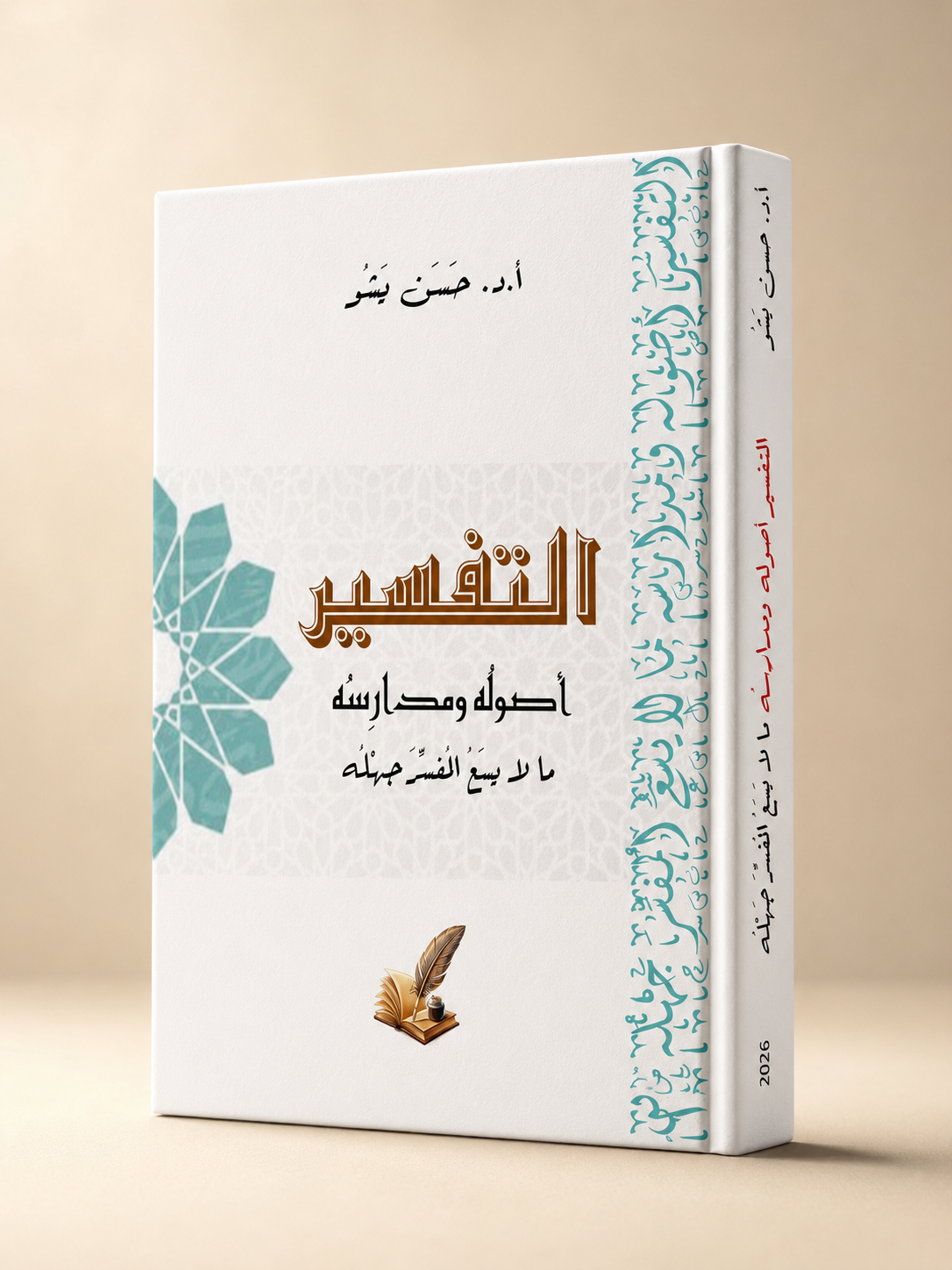
This book invites readers who seek wisdom and the meanings of revelation on an intellectual and spiritual journey through one of the engaging contemporary works on the Qur’an. Qur’anic Exegesis: Its Foundations and Schools—Essential Knowledge for Every Exegete, by Professor Hassan Yachou and published in 2026, is a rigorous academic work conceived not as a collection of pages to be read and set aside, but as a methodological compass. It protects students from interpretive pitfalls and guides them through the vast ocean of the Word of the Lord of the worlds.
The author begins from a deep sense of responsibility toward the Book of Allah. He rejects approaches often described as contemporary or modernist readings when they detach the Qur’an from its doctrinal, legislative, and ethical substance and make it a vessel for imported secular ideologies. For the author, as for major thinkers before him, the Qur’an is not merely a text for detached linguistic study. It is a living jurisprudence of life whose meanings open to those who live under its guidance, struggle to reform themselves and society, and follow the example of the first Qur’anic generation.
From this living perspective, the author defines tafsir and restores it to its proper place at the summit of the Qur’anic sciences. Linguistically, tafsir revolves around disclosure and clarification; technically, it is the discipline through which the Book of Allah is understood, its meanings explained, and its rulings derived. The book carefully distinguishes related terms. Tafsir is direct clarification; tadabbur is sustained reflection on the outcomes and purposes of the verses so that one may take heed; istinbat is the extraction of less apparent insights and rulings; and ta’wil is a further interpretive stage that explores deeper indications without contradicting the outward meaning. Every sound interpreter engaged in ta’wil must first be an exegete, but not every exegete reaches that level.
To prevent exegesis from becoming a field of blameworthy opinion, the book highlights the importance of the principles of tafsir: general rules and standards that protect the exegete from error and assist in preferring the stronger view when interpretations differ. The author traces the emergence of this discipline from principles scattered through early commentaries, including those of al-Tabari, Muqatil ibn Sulayman, and Ibn ‘Atiyya, until Ibn Taymiyya gave it an independent form in his Introduction to the Principles of Tafsir. These principles require that the Qur’an be interpreted according to recognised Arabic usage, that the most eloquent grammatical analysis be preferred, and that the distinctive features of Qur’anic expression be understood—for example, the stability suggested by nominal sentences, the renewal suggested by verbal sentences, the priority of technical religious meaning where relevant, and the generalisation conveyed by omitting an object.
The book also provides a transparent and grounded treatment of disagreement in exegesis. Consensus is a binding proof and cannot be violated to advance isolated opinions. Differences among the early scholars fall into two broad types: contradiction, where the positions cannot be reconciled and which is relatively rare, and variation, which is far more common and reflects richness and complementarity rather than conflict. Exegetes may express one meaning in related terms, cite different examples of a general word, or explain a word through one of its implications. Describing the “good life” as contentment, lawful provision, or Paradise is not a contradiction but an exploration of the verse’s broad range of meaning.
Causes of interpretive variation include the canonical Qur’anic readings, different grammatical analyses, words with multiple meanings, and questions of generality and particularity or absoluteness and qualification. Rules of preference, developed by leading scholars such as al-Tabari and Ibn Juzayy al-Kalbi, help identify the interpretation most consistent with Qur’anic context, the apparent meaning of revelation, and the views of the majority of the Companions and Successors.
The journey reaches a central point in its presentation of the sources of tafsir, arranged according to their authority. The first and highest source is interpreting the Qur’an by the Qur’an: what is concise in one passage is expanded elsewhere, and what is unclear in one place is explained in another—as the “night visitor” is identified in the same surah as “the piercing star.” The second source is the Prophetic Sunnah. The Prophet ﷺ conveyed and explained revelation; his Sunnah confirms Qur’anic rulings, clarifies and qualifies them, and may establish additional rulings. It is therefore a decisive criterion in weighing interpretations.
The third source is the exegesis of the Companions. They witnessed revelation, knew the circumstances in which verses were revealed, learned directly from the Prophet, and possessed a natural command of Arabic. Their interpretation, especially where they agreed, is consequently a primary reference. At the same time, the author strongly warns—following authorities such as Ibn ‘Abbas, Ahmad Shakir, and Ibn Kathir—against uncritical use of the Isra’iliyyat, reports inherited from the People of the Book. Reports that contradict Islam are rejected; those confirmed by revelation may be accepted; and matters on which revelation is silent, such as the names of the Companions of the Cave or the colour of their dog, provide no useful knowledge and should not be inserted into exegesis in a way that suggests reliability.
In this way the mind and character of the exegete are formed through an integrated method that joins reason to transmitted knowledge and narration to critical understanding. The student leaves this Qur’anic journey equipped with theoretical insight and practical tools, able to navigate the meanings of the Qur’an without being swept away by waves of doubt, and ready to live by its guidance and call others to it with knowledge and clarity.
Book questions
Book Certificate Quiz
Answer every question to earn a verified certificate with a unique serial number.
Related Books
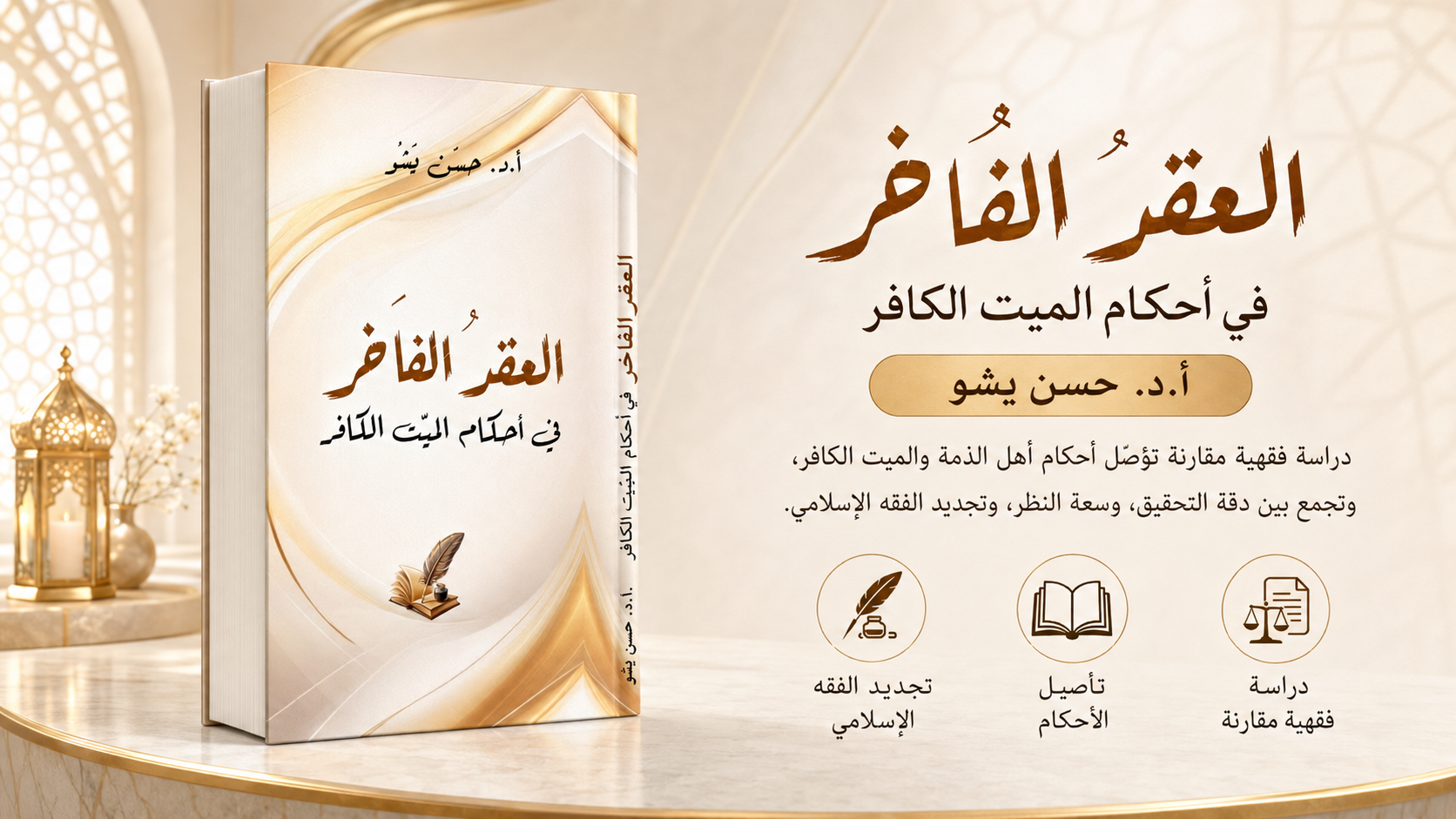
A comparative legal study of rulings concerning non-Muslims before death, during the final illness, and after death, covering visitation, funeral care, burial, condolences, bodily dignity, criminal liability, blood money, inheritance, and expiation across classical and contemporary contexts.
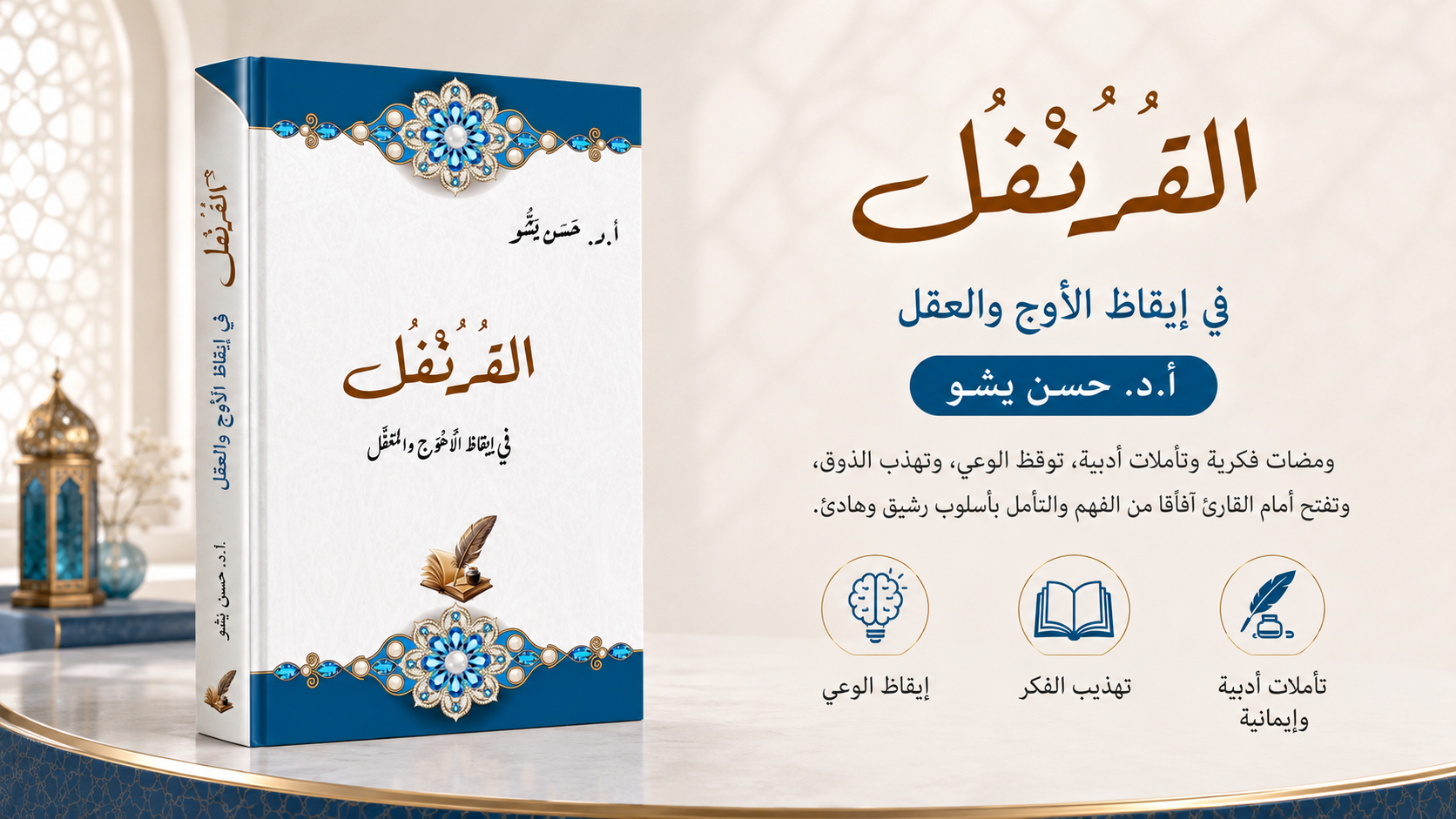
An educational collection of 500 numbered maxims drawn from experience and reflection on faith, character, relationships, trust, disappointment, patience, maturity, speech, self-respect, and the lessons of life, with the clove serving as a metaphor for cleansing the mind.
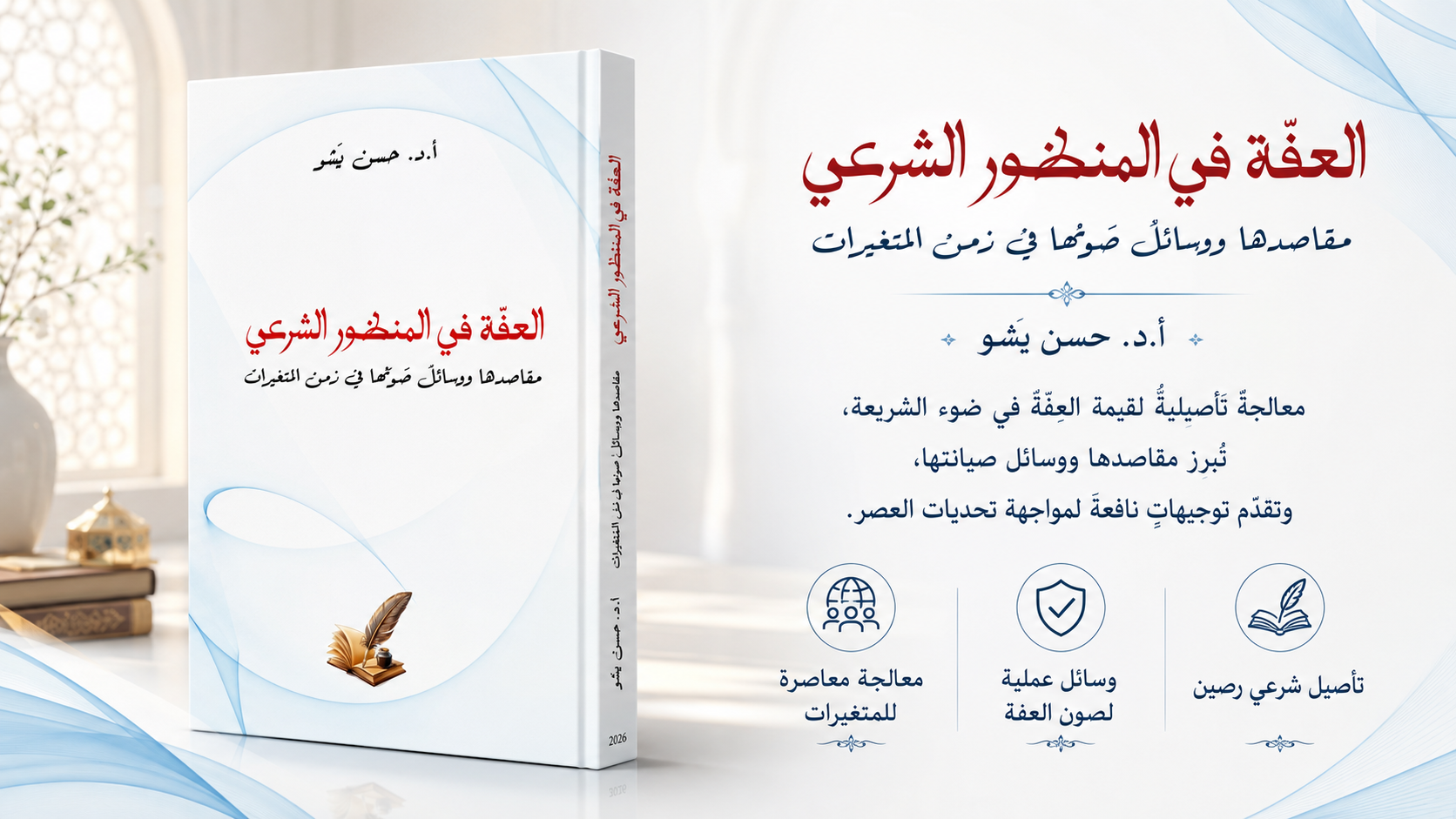
A foundational legal and educational study of chastity in the Qur’an, Prophetic Sunnah, and Islamic heritage, explaining its objectives and effects while offering practical means to preserve it amid contemporary social and media change.
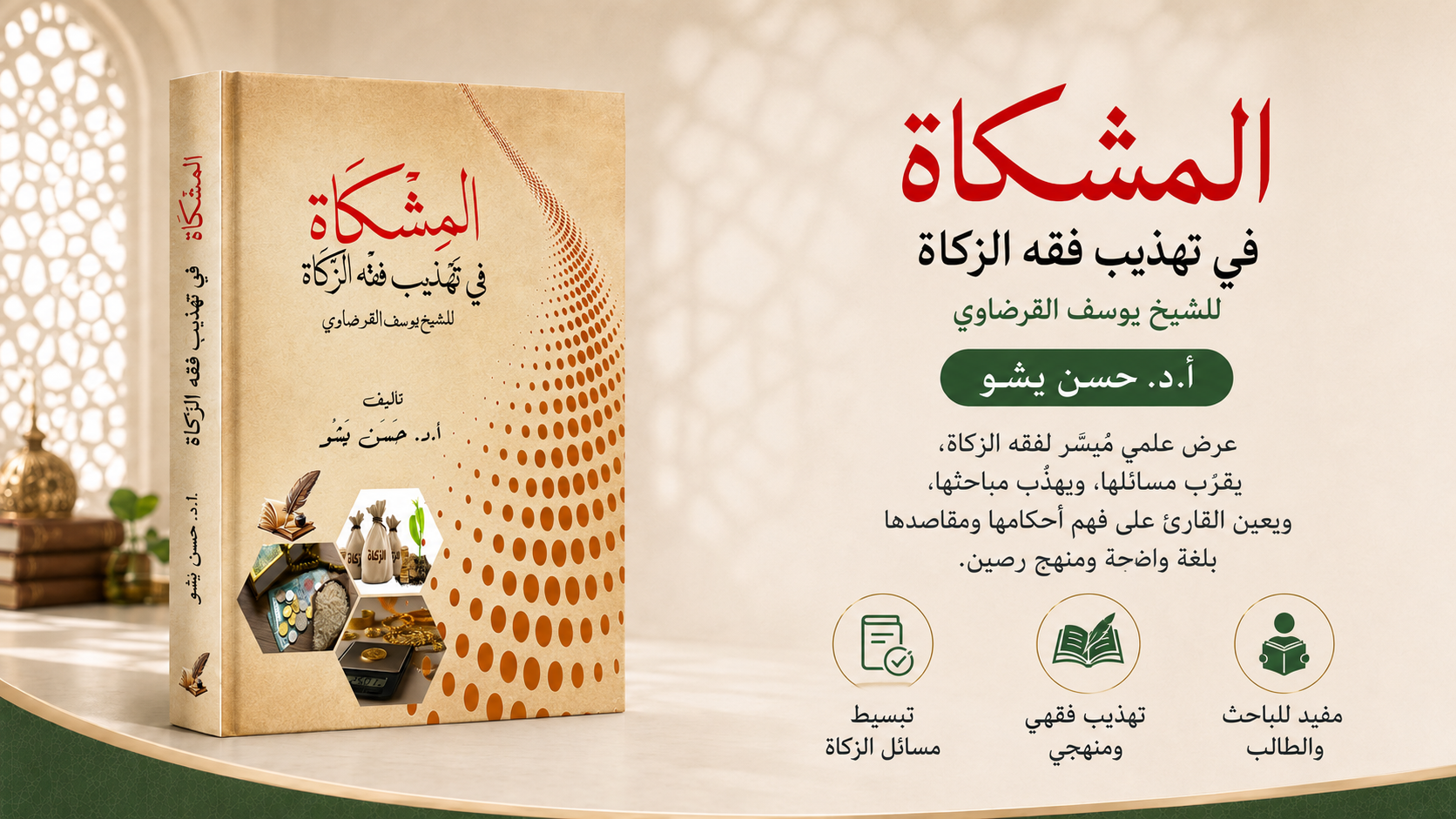
A rigorous and accessible refinement of Sheikh Yusuf al-Qaradawi’s landmark Fiqh al-Zakat, presenting its principal rulings, contemporary updates, legal objectives, modern measurements, and practical tables for students and researchers in Islamic economics.