
The Need for the Arabic Language in the Islamic Sciences: A Foundational and Applied Study
A book by Professor Hassan Yachou examining the indispensable role of Arabic in understanding, teaching, and researching the Islamic sciences through a foundational and applied approach.
Citation preview:
أكاديميحسن يشو (2026). The Need for the Arabic Language in the Islamic Sciences: A Foundational and Applied Study. https://www.hassanyachou.org/en/books/hajat-al-ulum-al-islamiyya-ila-al-lugha-al-arabiyya
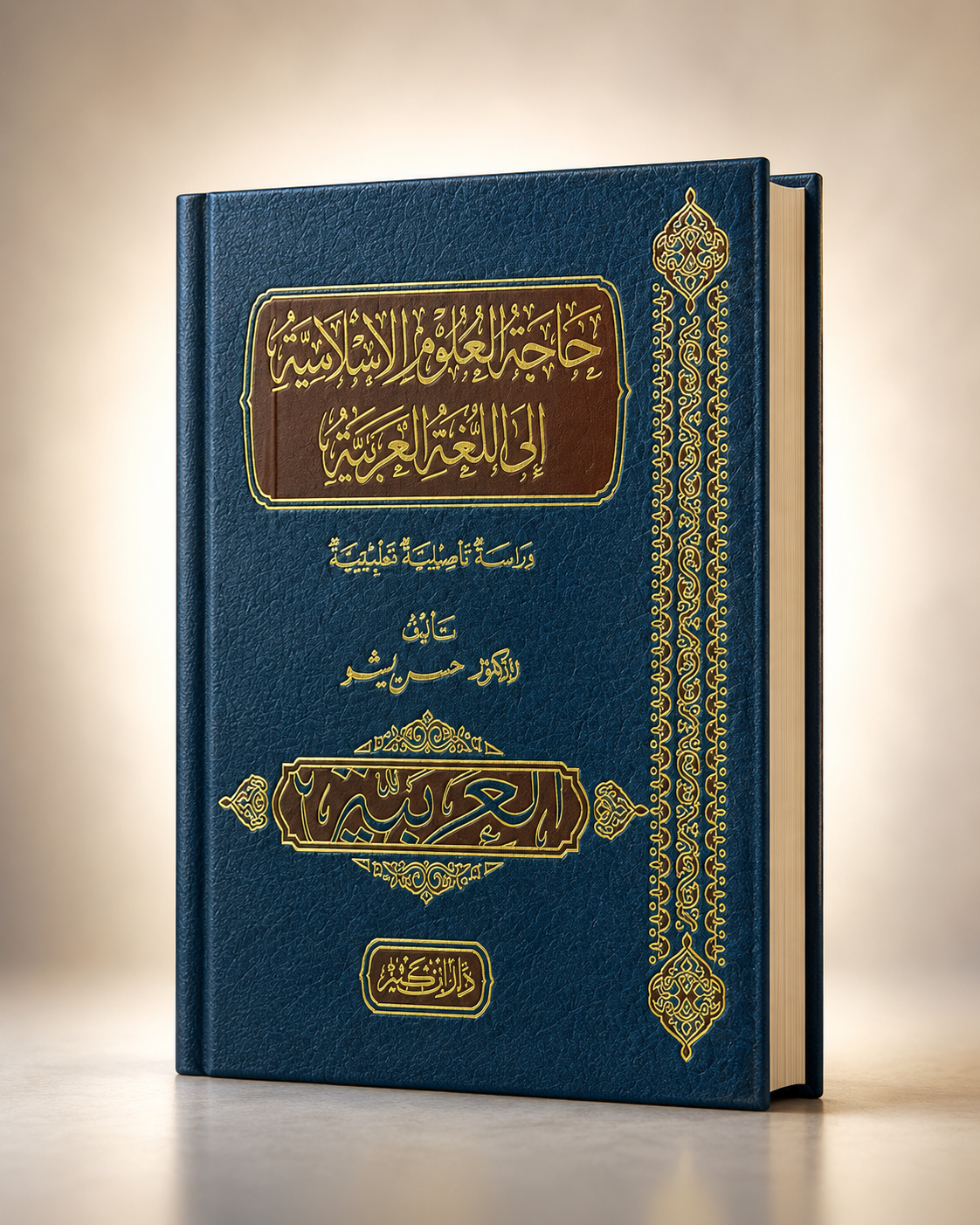
Book Summary
The Need for the Arabic Language in the Islamic Sciences: A Foundational and Applied Study, by Professor Hassan Yachou, addresses a central thesis: Arabic is one of the foundations for understanding the Islamic sciences. It is a primary means of accurately grasping the meanings of revelation, safeguarding sound inference, and protecting the scholarly heritage from misunderstanding and distortion. The book does not merely praise Arabic; it demonstrates its practical role in theology, Qur’anic exegesis, Hadith, jurisprudence, legal theory, the objectives of Islamic law, education, and da‘wah.
The author begins by defining need, knowledge, the Islamic sciences, and language. He explains that saying the Islamic sciences need Arabic means that their proper understanding, verification, and application depend on a firm knowledge of the language of the Arabs and their modes of expression. Arabic is therefore not an ornament of style, but a scholarly instrument that preserves meaning and controls interpretation.
The book presents the breadth, derivational capacity, flexibility, precision, and expressive power of Arabic. These qualities enabled it to carry legal, rational, and spiritual meanings and made it fit to convey revelation, serve the Qur’an and Sunnah, and contribute to the intellectual construction of the Muslim community. Arabic consequently became a language of worship, knowledge, and civilisation, not merely an ethnic language or a tool of everyday communication.
The author stresses that the relationship between Arabic and the Sharia is one of revelation, understanding, and preservation. The Qur’an was revealed in a clear Arabic tongue; the Prophetic Sunnah came in eloquent speech; the Companions understood the texts within their Arabic context; and the Islamic sciences developed within this linguistic environment. Learning Arabic is therefore a path to understanding what Allah and His Messenger intended and a safeguard against unstable readings of the sacred texts.
In theology, Arabic is essential for understanding doctrinal terms, especially those concerning the Divine Names and Attributes, the meaning of tawhid, and texts that may appear ambiguous. Misreading a technical religious term can lead to distorted interpretation, negation of meaning, or an improper anthropomorphism. Sound doctrine thus requires disciplined attention to language while preserving reverence for revelation and interpreting it in a manner befitting Allah.
In the Qur’anic sciences, Arabic is presented as a comprehensive key to uncommon vocabulary, difficult and ambiguous passages, canonical readings, grammar, pausing and resumption, semantic correspondences, parables, figurative expression, and rhetorical inimitability. All these disciplines aim to establish the Qur’an’s meaning and enable its proper reception. The stronger a scholar’s command of Arabic, the greater the ability to perceive the Qur’an’s rhetorical dimensions and interpret it soundly.
The sciences of Hadith likewise require Arabic both to preserve transmission and to understand meaning. Prophetic speech is concise and eloquent, and a single expression may carry different senses depending on context and syntax. The student of Hadith therefore needs knowledge of rare vocabulary, variant wordings, transmission by meaning, apparently problematic or conflicting reports, and the effect of grammar and sentence structure on interpretation.
In Islamic jurisprudence, legal rulings arise from understanding the discourse of the Lawgiver, and that understanding rests on the indications of words. A ruling may change because of a particle, condition, exception, command, prohibition, general expression, or particular qualification. A jurist’s training is therefore incomplete without an Arabic competence that enables precise reading, interpretation, and application.
The role of Arabic is especially evident in legal theory, which is built around words and their indications: commands and prohibitions, the general and the particular, the absolute and the qualified, the concise and the clarified, literal and figurative usage, explicit meanings and implications, and the semantic force of particles. Independent legal reasoning requires a precise understanding of how texts indicate rulings; weakness in Arabic therefore weakens the very instrument of inference.
The book then turns to the objectives of Islamic law. These objectives are not derived from impression or personal opinion, but from the texts, their contexts, and comprehensive induction. Arabic protects the objectives from arbitrary expansion just as it protects the outward wording from rigid literalism. A sound method brings together textual indication and legislative wisdom, expression and purpose, without bypassing the text or cancelling its intent.
For academic research in Islamic studies, Arabic is a condition of scholarly rigour. The researcher needs it to define terminology, understand texts, edit manuscripts, formulate research problems, and arrange evidence. Linguistic weakness produces conceptual ambiguity, fragile argument, and an inaccurate reading of the heritage. Arabic is consequently part of the research method itself, not merely a medium of writing.
In Islamic education, the author links Arabic to the formation of the learner’s personality. Language shapes thought, refines taste, and connects younger generations to the Qur’an, Sunnah, and scholarly heritage. This highlights the importance of Arabic instruction in the family and school, attention to reading and accurate pronunciation, the cultivation of linguistic competence among children and students, and the teaching of Arabic to non-native speakers.
In da‘wah, the caller needs clear expression, sound wording, and an effective style. A message cannot achieve its intended effect unless it is carried by language that is lucid and well composed. The book therefore emphasises eloquence, linguistic accuracy, careful choice of words, avoidance of grammatical error and vulgarity, and protection of religious discourse from weakness and clumsiness.
The book concludes that Arabic is present throughout the Islamic sciences as foundation, instrument, and criterion. It safeguards the meanings of faith, opens the doors of Qur’anic understanding, assists in comprehending the Sunnah, disciplines jurisprudence, establishes the principles of inference, guides reflection on the higher objectives, raises the standard of research, protects education, and strengthens da‘wah.
In short, Arabic is not treated here as a subject detached from the Islamic sciences, but as a road to them, a protective boundary around them, and a key to their understanding. The book is a scholarly call to restore Arabic to religious formation, because service to the Islamic sciences begins with service to the language of revelation and with enabling the community to understand the Book of its Lord, the Sunnah of its Prophet, and the heritage of its scholars.
Book questions
Book Certificate Quiz
Answer every question to earn a verified certificate with a unique serial number.
Related Books
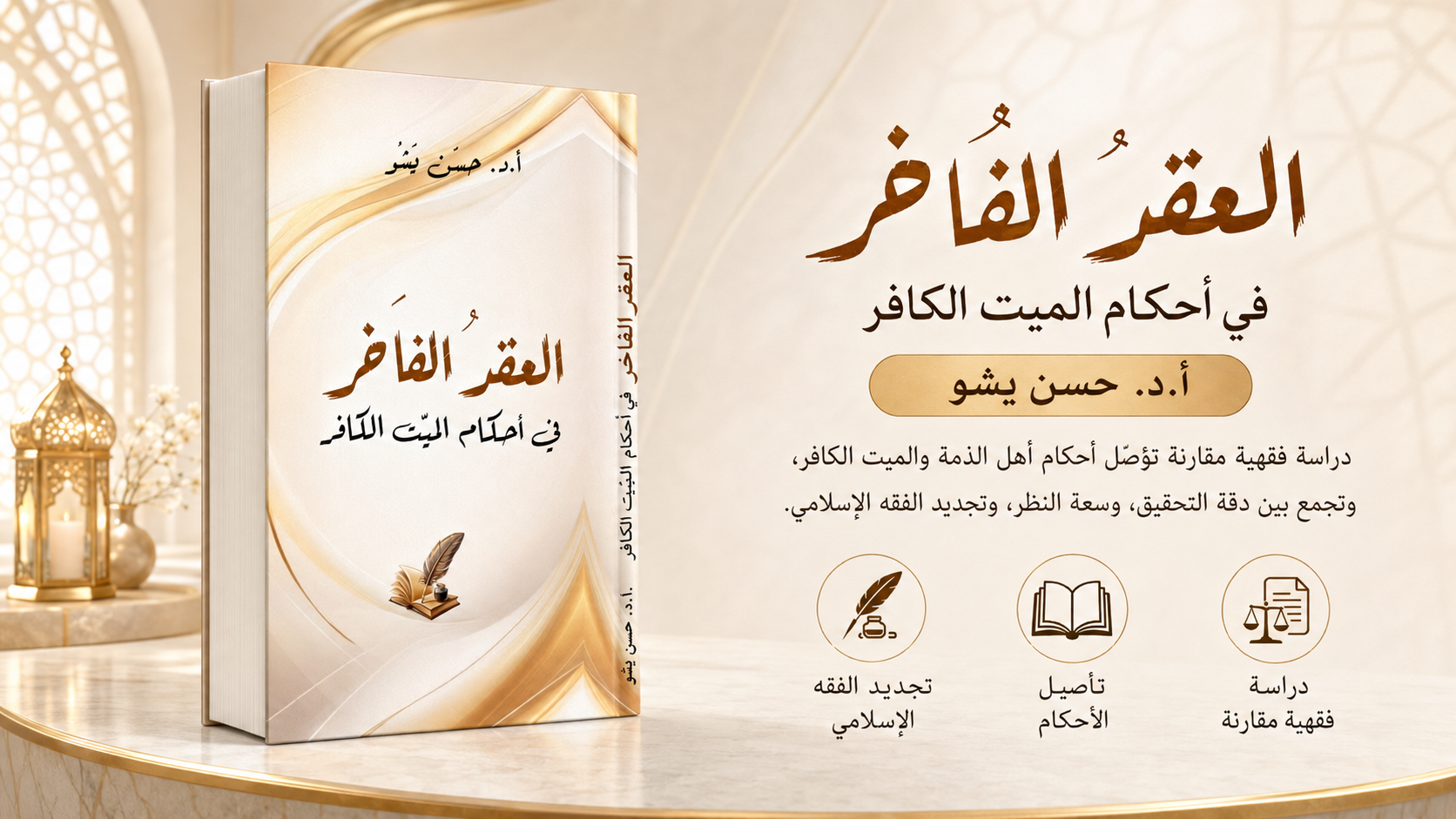
A comparative legal study of rulings concerning non-Muslims before death, during the final illness, and after death, covering visitation, funeral care, burial, condolences, bodily dignity, criminal liability, blood money, inheritance, and expiation across classical and contemporary contexts.
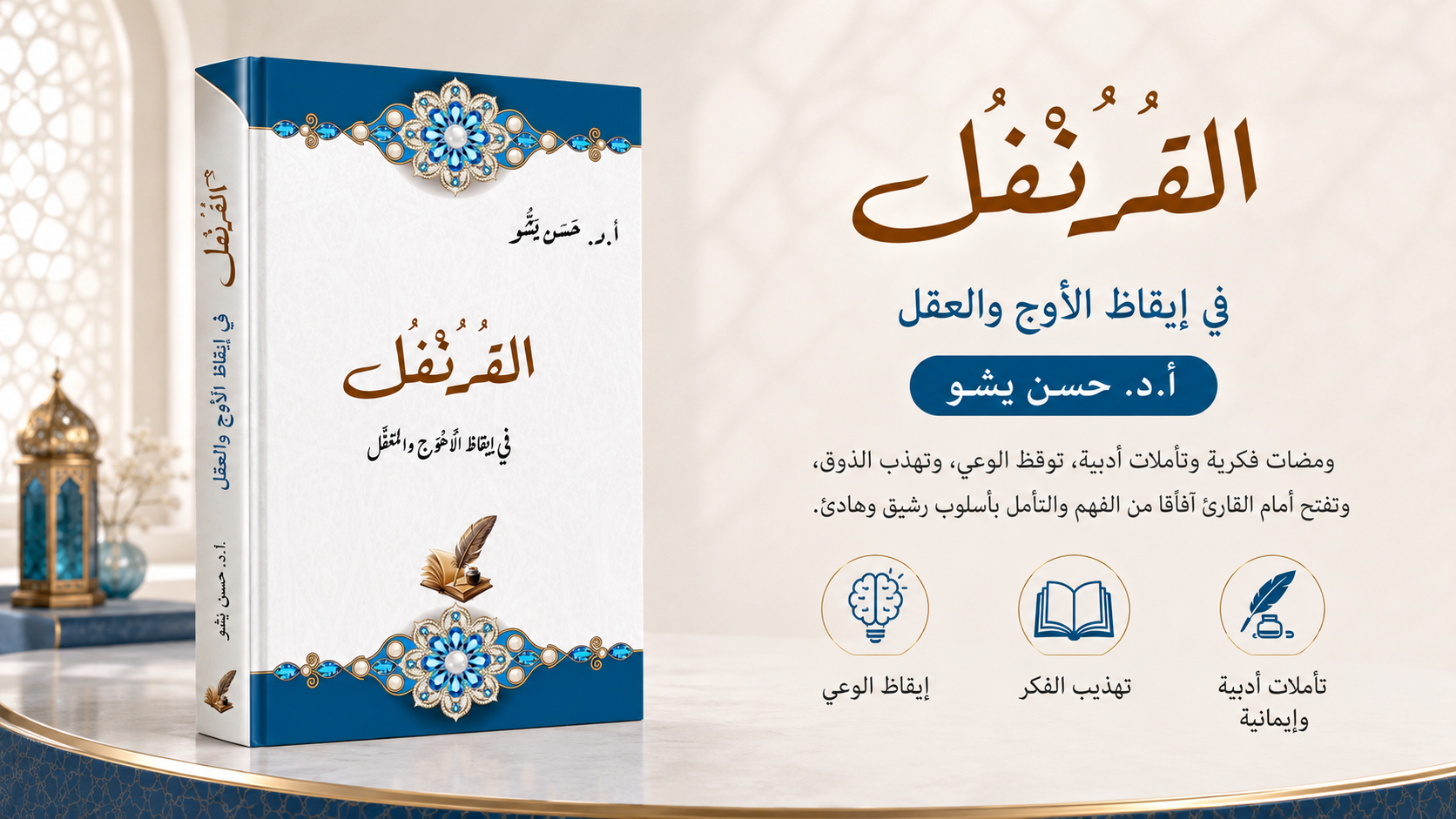
An educational collection of 500 numbered maxims drawn from experience and reflection on faith, character, relationships, trust, disappointment, patience, maturity, speech, self-respect, and the lessons of life, with the clove serving as a metaphor for cleansing the mind.
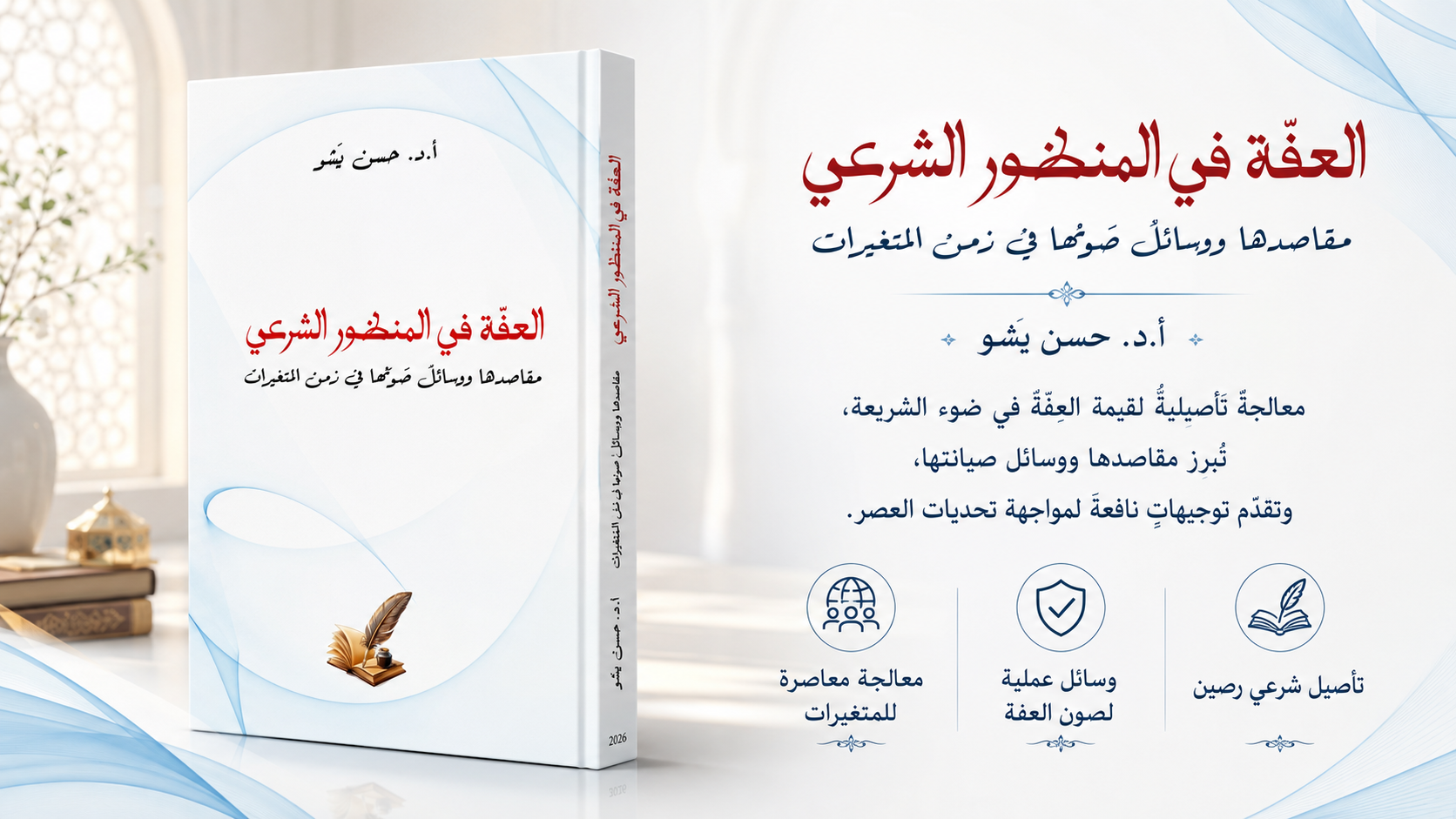
A foundational legal and educational study of chastity in the Qur’an, Prophetic Sunnah, and Islamic heritage, explaining its objectives and effects while offering practical means to preserve it amid contemporary social and media change.
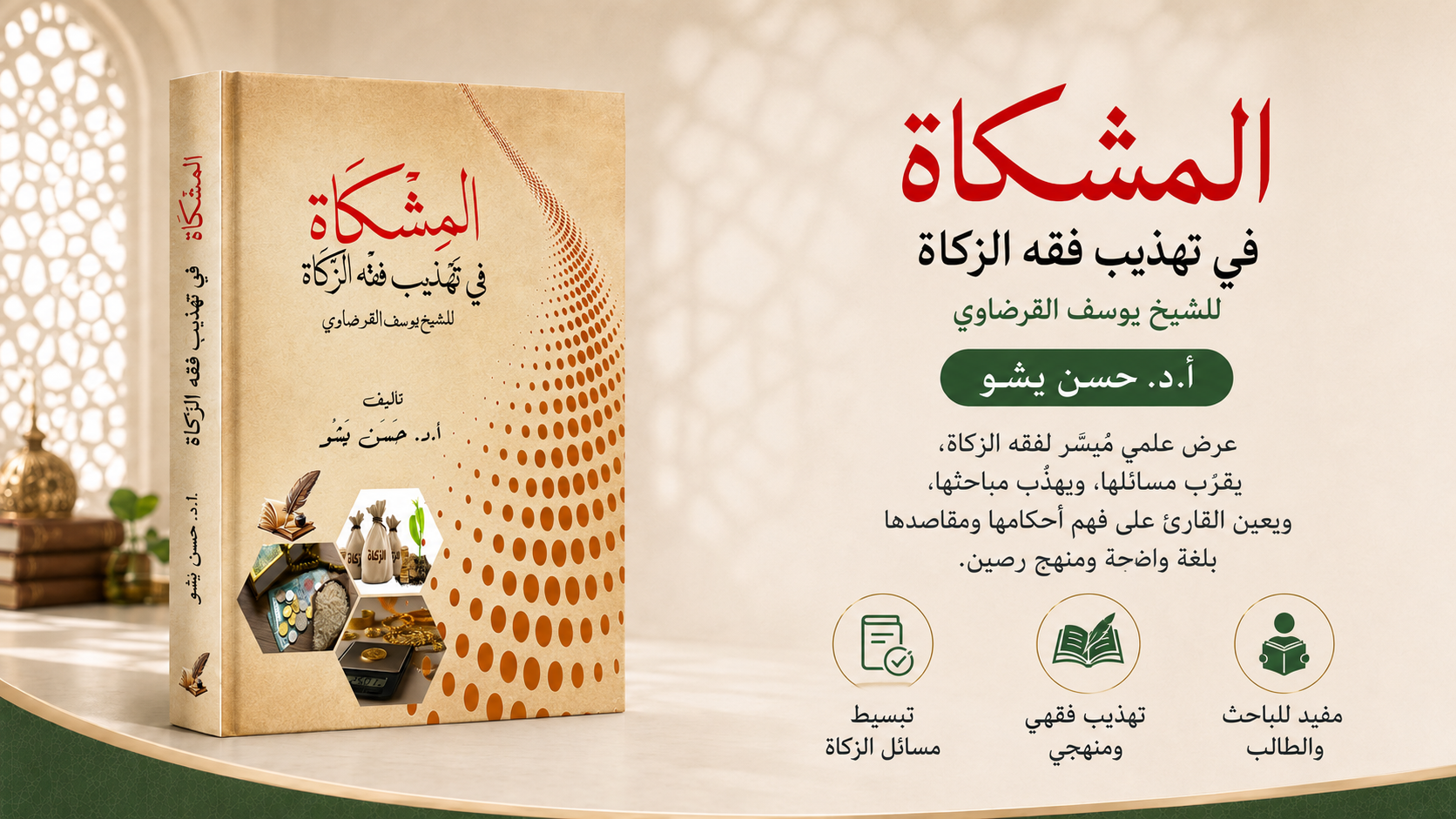
A rigorous and accessible refinement of Sheikh Yusuf al-Qaradawi’s landmark Fiqh al-Zakat, presenting its principal rulings, contemporary updates, legal objectives, modern measurements, and practical tables for students and researchers in Islamic economics.