
The Inimitability of the Qur’an: Theoretical Insights and Practical Applications
Professor Hassan Yachou offers a descriptive, analytical, and applied study of the Qur’an’s rhetorical, legislative, scientific, and unseen dimensions of inimitability, together with a reasoned refutation of the Mu‘tazilite theory of sarfa.
Citation preview:
أكاديميحسن يشو (2026). The Inimitability of the Qur’an: Theoretical Insights and Practical Applications. مكتبة الطالب / وجدة. https://www.hassanyachou.org/en/books/كتاب-اعجاز-القران-نهايية-اعجاز-القران-بصاير-نظرية-وسبايك-تطبيقية
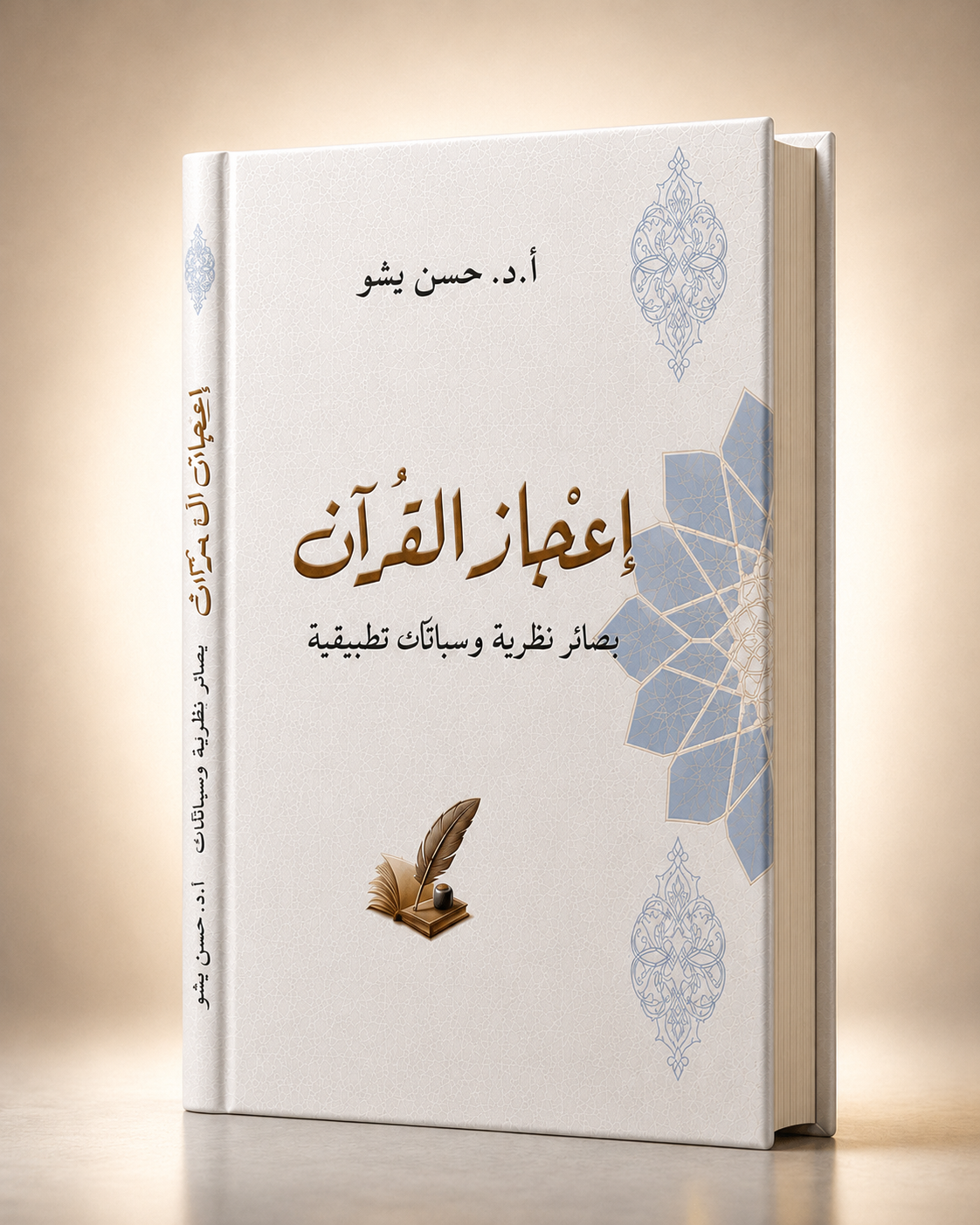
Summary of The Inimitability of the Qur’an: Theoretical Insights and Practical Applications
This substantial Qur’anic study, composed during the quiet hours before dawn in pursuit of divine blessing and insight, begins by laying down sound foundations and a precise method for anyone seeking to experience the beauty of the Qur’an’s inimitability and explore its secrets. The author explains that the Qur’an, this enduring constitution, opens the treasures of its expression to those who approach it with sincerity, spiritual purity, broad learning, and a firm command of Arabic, the language of revelation and the key to understanding. This intellectual preparation must be nourished by the Prophetic Sunnah, which explains the Qur’an, and by sustained contemplative reading that examines the verses closely. The ultimate purpose is to live by the Qur’an, embody its ethics, and call others to it.
To demonstrate the uniqueness of this lasting miracle, the book presents a historical and theological comparison between the miracles of earlier prophets and those of the final Messenger ﷺ. Earlier miracles—such as Moses’ staff, the she-camel of Salih, and Abraham’s deliverance from the fire—were material signs witnessed directly and limited to their time. Although the Prophet Muhammad ﷺ was also supported by extraordinary physical signs, divine wisdom made the supreme and enduring miracle of Islam an intellectual, verbal, and rhetorical one: the Qur’an, whose wonders do not end and whose freshness is not diminished by repetition. Such a miracle is suited to a universal message addressed to human reason across the ages.
The author then examines the core meaning of i‘jaz: the divine demonstration that all creation is incapable of producing anything equal to the Qur’an, despite the Arabs’ mastery of eloquence. The Qur’an was revealed gradually over twenty-three years to strengthen the Prophet’s heart and educate the emerging community, yet its verses and chapters were arranged by divine instruction in a coherent fabric as though revealed all at once. Its challenge was progressively expressed: to produce a work like the whole Qur’an, then ten invented surahs, and finally a single surah. Complete failure before this divine discourse was the result.
The splendour of the Qur’an inspired generations of scholars to establish the study of its inimitability: al-Jahiz in Nazm al-Qur’an, al-Khattabi, al-Rummani, al-Baqillani, and ‘Abd al-Qahir al-Jurjani with his theory of composition, followed in modern times by Mustafa Sadiq al-Rafi‘i, Muhammad ‘Abd Allah Draz, Sayyid Qutb, and Fadil al-Samarra’i. Their works enriched the Islamic library with invaluable rhetorical and analytical insights.
The Qur’an possesses qualities shared by no other book. It is divinely preserved from alteration, transmitted with certainty, perfected in its verses, made accessible for remembrance, and offers comprehensive guidance for faith and life. Its miracle is calm and enduring, appealing to reason rather than relying on sensory shock. Its dimensions include rhetorical and linguistic inimitability, evident in the beauty of its composition, the precision of its vocabulary, and the depth of its meanings; legislative inimitability, which orders individual, family, and social life without contradiction; and scientific indications to cosmic realities that were unknown at the time of revelation.
In defending the Qur’an’s intrinsic excellence, the author offers a detailed rational and textual refutation of the theory of sarfa, associated with Ibrahim ibn Sayyar al-Nazzam of the Mu‘tazila. This theory claimed that the Arabs were capable of matching the Qur’an but that God removed their ability or diverted their resolve. The author argues that this contradicts the consensus that the Qur’an is miraculous in its wording, structure, and eloquence. If the challengers had been deprived of ability, the challenge itself would have lost its meaning. Moreover, pre-Islamic Arabic literature contains nothing comparable to the Qur’an, while leading masters of eloquence such as al-Walid ibn al-Mughira openly recognised its unrivalled power.
The book also reflects on the Qur’an’s inimitability in its disclosure of the unseen across three dimensions. The first concerns the past: the Qur’an recounts with precision the stories of earlier peoples and prophets that the Prophet ﷺ had not previously known, including the story of Joseph and the drowning of Pharaoh, whose body was preserved as a sign.
The second concerns events hidden at the time of revelation: the Qur’an exposed the inner attitudes of the hypocrites and disclosed secret plots and schemes before they unfolded. The third concerns the future: it foretold major events that later occurred, including the Byzantine victory over the Persians within a few years, the succession of the believers on earth, the death of Abu Lahab and his wife in unbelief, and the enduring preservation of the Qur’an.
All these dimensions converge in the higher purposes of Qur’anic inimitability: guiding hearts, establishing the truthfulness of the Prophetic mission, answering doubts, and planting certainty and tranquillity in the hearts of believers and students of knowledge.
Book questions
Book Certificate Quiz
Answer every question to earn a verified certificate with a unique serial number.
Related Books
A comparative legal study of rulings concerning non-Muslims before death, during the final illness, and after death, covering visitation, funeral care, burial, condolences, bodily dignity, criminal liability, blood money, inheritance, and expiation across classical and contemporary contexts.
An educational collection of 500 numbered maxims drawn from experience and reflection on faith, character, relationships, trust, disappointment, patience, maturity, speech, self-respect, and the lessons of life, with the clove serving as a metaphor for cleansing the mind.
A foundational legal and educational study of chastity in the Qur’an, Prophetic Sunnah, and Islamic heritage, explaining its objectives and effects while offering practical means to preserve it amid contemporary social and media change.
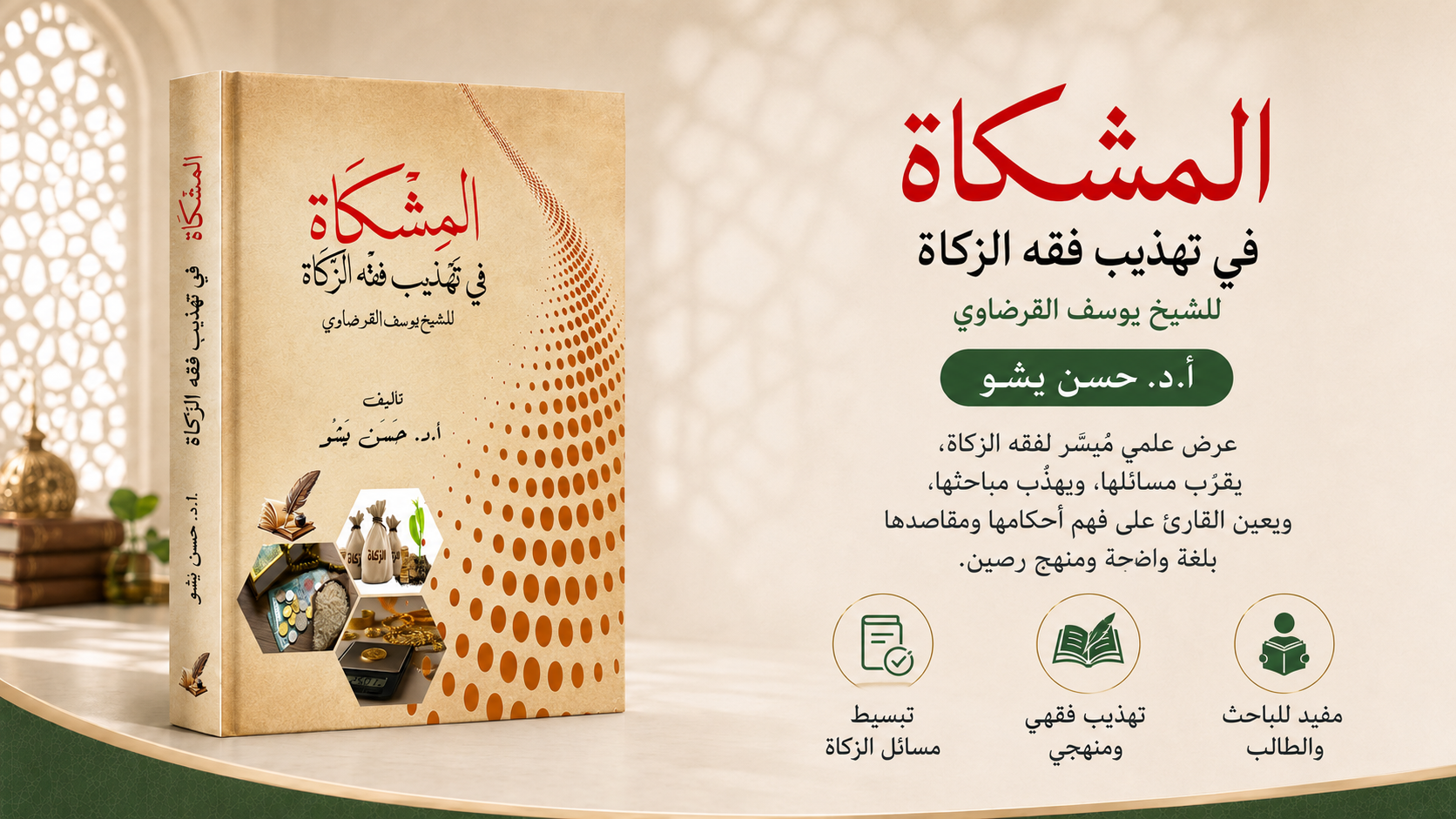
A rigorous and accessible refinement of Sheikh Yusuf al-Qaradawi’s landmark Fiqh al-Zakat, presenting its principal rulings, contemporary updates, legal objectives, modern measurements, and practical tables for students and researchers in Islamic economics.