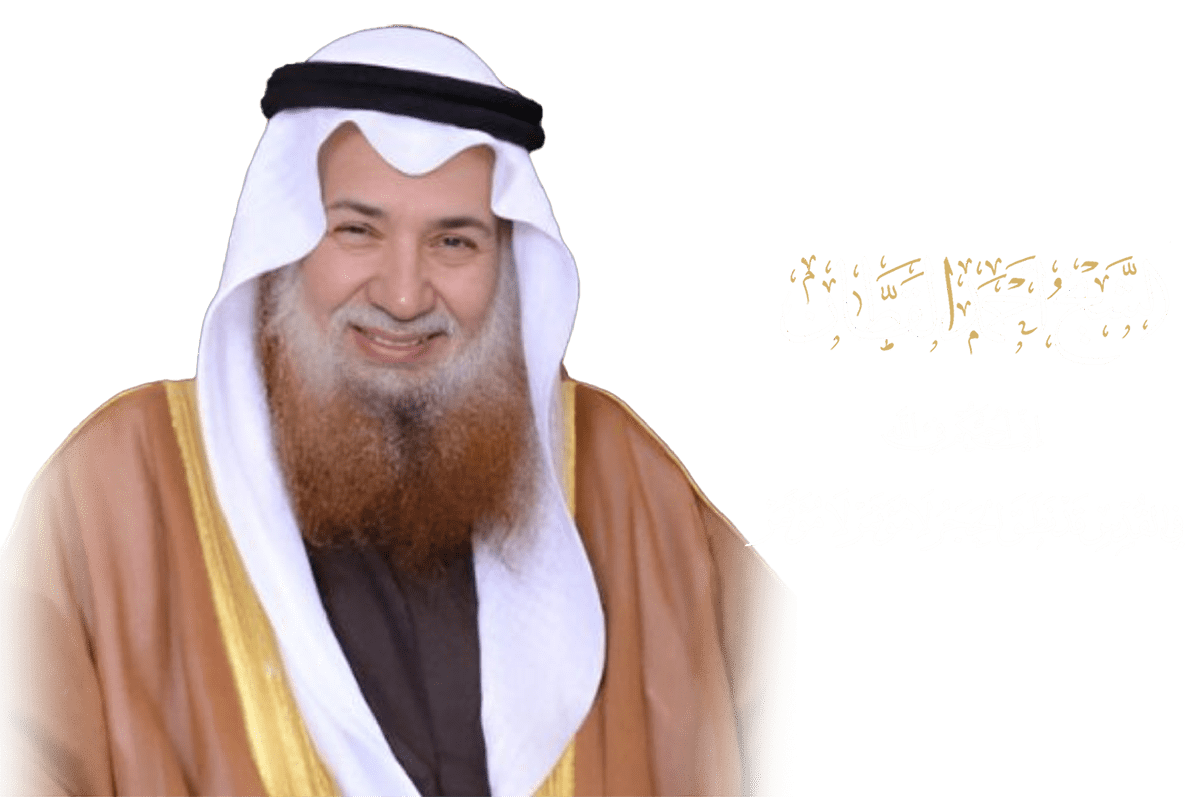
One Community and the Noble Qur’an | Address by Professor Hassan Yachou
A scholarly address by Professor Hassan Yachou at the Qur’anic evening organised by Al-Nibras Cultural Foundation on the theme of one community and the Noble Qur’an.
Citation preview:
أكاديميحسن يشو (2026). One Community and the Noble Qur’an | Address by Professor Hassan Yachou. https://www.hassanyachou.org/en/videos/al-ummah-al-wahida-wa-al-quran-al-karim
Transcript of Professor Hassan Yachou’s address at the Qur’anic evening organised by Al-Nibras Cultural Foundation.
The Qur’an blesses time, place, and people
A gathering adorned by Qur’anic recitation gains beauty and life from the Book of Allah. The Prophet ﷺ taught that when people gather in a house of Allah to recite and study His Book, tranquillity descends upon them, mercy covers them, angels surround them, and Allah mentions them among those near Him. Deeds remain the true measure: lineage cannot accelerate a person whose actions hold him back.
The Qur’an also gives distinction to time. Ramadan derives its special rank from the revelation of the Qur’an during it. Laylat al-Qadr is a night like other nights in its created nature, but it became better than a thousand months because Allah chose it for the descent of revelation. In the same way, a human being is raised through connection with the Qur’an. A heart empty of it is compared in the Prophetic tradition to a ruined house; connection with the Qur’an is a path from ruin to spiritual and civilisational flourishing.
Sciences developed in service of the Qur’an
Many disciplines arose to serve the Book of Allah. Arabic grammar, morphology, rhetoric, and lexicography developed in close relationship with the need to preserve and understand the Qur’an. Works on figurative usage and rare Qur’anic vocabulary may be linguistic in origin, but their connection to the Qur’an places them within the Qur’anic sciences.
We therefore speak of the “sciences” of the Qur’an in the plural: occasions of revelation, recitation, canonical readings, uncommon vocabulary, abrogation, objectives, and many other disciplines. Major works such as al-Zarkashi’s Al-Burhan and al-Suyuti’s Al-Itqan bear witness to this continuing scholarly service.
Ramadan, Tarawih, and the legacy of people of truth
Ramadan’s emblem is the Qur’an, and Tarawih makes its public recitation visible. Professor Yachou recalls Imam Ahmad ibn Hanbal’s saying, “Between us and them are the funerals”: public remembrance of scholars and people of truth can reveal the lasting impact of sincere service despite the trials they endured. He also recalls attending the funeral of his teacher Sheikh Yusuf al-Qaradawi and the broad scholarly school of moderation he left behind.
A purposive lesson on the merit of knowledge
Islamic law permits game caught by a trained hunting dog when the relevant conditions are met, but not game killed by an untrained animal. Al-Qurtubi drew from this a striking lesson: this is the merit of knowledge even among dogs. Training changes the legal consequence, showing the honour and transformative effect of learning.
Another precise observation concerns slaughter: one says “In the name of Allah” without adding the two Divine Names of mercy. The act involves wounding and bloodshed, which does not suit invoking mercy in that specific formula. This illustrates that rulings and expressions in the Sharia carry purposes and carefully observed meanings.
A Qur’anic method for victory and empowerment
The verse stating that Allah sent His Messenger with guidance and the religion of truth “to make it prevail over every religion” appears in Surat al-Tawbah, Surat al-Saff, and Surat al-Fath. Professor Yachou reads this sequence as a practical method: sincere repentance and return to Allah; then unifying the word and closing the ranks; then opening, victory, and empowerment as the fruit of repentance and unity.
A closing educational anecdote
The address ends with gentle humour. Professor Yachou named his son Tariq after Tariq ibn Ziyad, hoping he might one day help reopen al-Andalus. Yet when the infant refused to open his mouth for his bottle, his father joked: “You could not even open your mouth—how will you open al-Andalus?” The anecdote lightens the close while preserving a spirit of hope and education.
Quick Quiz
Check Your Understanding
Laylat al-Qadr acquired its special honour through its association with the revelation of the Noble Qur’an.
Choose the answer that seems correct.